
.png)
.png)
Designing Play Areas for Children with Autism: 7 Key Elements for a Sensory-Friendly Space
- Ian Lewin
- Mar 20, 2025
- 4 min read

Play is a universal language for children—it’s how they explore, learn, and connect with the world around them. However for children with autism spectrum disorder (ASD), traditional play areas can sometimes feel overwhelming or inaccessible due to sensory sensitivities, social challenges, or unpredictable environments. That’s where thoughtful, inclusive design comes in. At KidzTrends, we believe every child deserves a space to thrive, and designing sensory-friendly play areas is a powerful step toward that goal. In our line of work, we’re constantly learning from our clients—and recently, while designing a playground for a school that specializes in supporting kids with autism, we gained incredible insights from the pros who run it. We’ve honed seven key elements, inspired by their expertise, to create a play space that supports children with autism while fostering fun, safety, and growth.

1. Calming Color Schemes
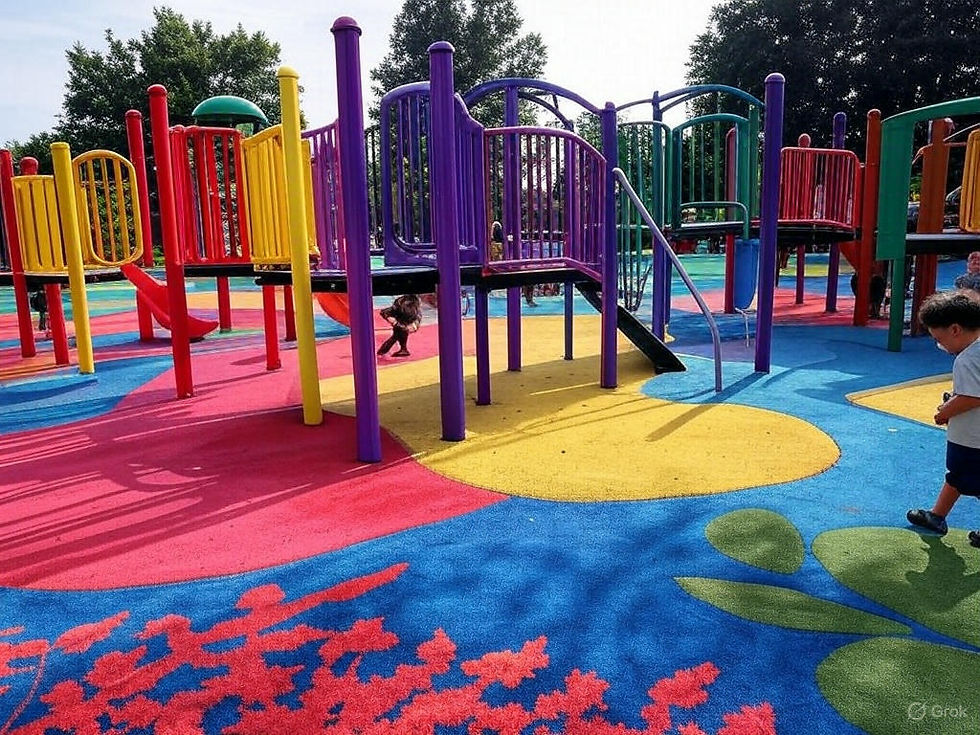
Color has a profound impact on mood and sensory processing. Bright, clashing colours like neon reds or yellows can overstimulate children with autism, who may be hypersensitive to visual input. The team at the school taught us that soft, muted tones—pale blues, greens, or earthy neutrals—work wonders. These hues create a soothing backdrop that reduces sensory overload while still feeling inviting. We now steer clear of busy patterns or high-contrast designs, knowing they can throw off a child’s focus.
2. Quiet Zones for Retreat
Play areas are often buzzing with energy, but that noise and activity can overwhelm some kids with autism. The school’s staff emphasized the need for designated quiet zones—safe havens where kids can decompress. We incorporated cosy nooks with bean bags, noise-cancelling headphones, and even a small tent with dim lighting into the playground design. Placing these spots just off the main action, yet still accessible, was a game-changer they insisted on, and we saw the difference it made firsthand.
3. Sensory Play Options
Children with autism often experience the world through their senses in unique ways. The pros at the school showed us how vital it is to include sensory play that kids can control. We added tactile panels with varied textures (smooth, bumpy, soft), a gentle water feature, and a sand table—elements the staff swore by for engaging kids who seek sensory input. Watching the children explore these on their own terms was a lesson in designing for autonomy.
4. Predictable Layouts
Uncertainty can spark anxiety in children with autism, and the school team drilled this into us. A clear, predictable layout became our priority—wide pathways, minimal obstacles, and visual cues like signs or symbols to mark zones (e.g., “Swing Zone” or “Climbing Area”). They likened it to Stuart Little navigating his world (yes, that Stuart Little!), and we took their advice to heart. The result? A space that feels ordered and approachable, reducing stress for everyone.
5. Soft and Safe Materials
Safety is non-negotiable, but for kids with autism—who might have unique motor skills or sensory thresholds—soft, forgiving surfaces are critical. The school’s experts pushed us to prioritise rubberised flooring, padded edges, and lightweight equipment. They shared stories of kids who’d bump into things without noticing, reinforcing why sharp corners or hard metals don’t belong in these spaces. It’s a lesson in comfort we won’t forget.
6. Adjustable Lighting
Lighting can make or break a sensory-friendly space, and the school staff were adamant about avoiding harsh fluorescents or flickering bulbs. They guided us toward natural light paired with dimmable, warm-toned fixtures—something we tweaked during the project based on their feedback. Being able to adjust brightness to suit each child’s needs turned out to be a small change with a huge impact.
7. Inclusive Equipment
The heart of any play area is its equipment, and inclusivity is where it shines. The school pros encouraged us to include swings with supportive harnesses, low climbing structures, and a wheelchair-accessible ramp—features that let every child join in. They also pointed out how gentle, repetitive motion (think rocking chairs or gliders) calms kids with autism. Seeing those elements in action at the playground opening was proof of their wisdom.
Building a World Where Every Child Plays
Designing play areas for children with autism isn’t just about meeting their needs—it’s about creating a space where all kids can play together. Working with this school taught us more than we could’ve imagined, and it’s a privilege to learn from clients who live this every day. Inclusive design fosters understanding, breaks down barriers, and reminds us that every child deserves joy and connection. At KidzTrends, we’re passionate about turning this vision into reality, one sensory-friendly play area at a time—thanks to the pros who show us the way.
Ready to create a play space that works for every child? Contact us at KidzTrends to bring your vision to life! Visit us at www.kidztrends.co.za, email sales@kidztrends.co.za, or give us a call at +27 82 663 4511. Let’s design a world where every kid can play, grow, and thrive—together.

Comments